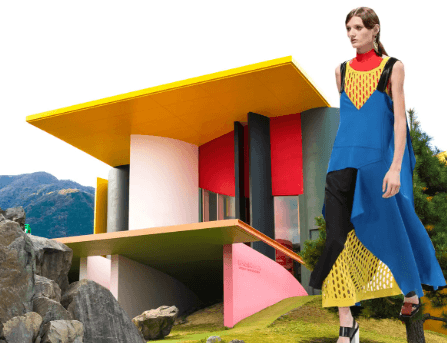
Architecture informs fashion as a quiet dialogue: volumes, grids, and lines translate into silhouettes and seams. Facades become paneling and texture, brick and glass echoing in tactile surfaces. Urban geometry yields a disciplined pattern language, guiding fabric behavior and construction. The result is restrained yet expressive, a collection built on measurable details rather than ornament. The next step reveals how these architectural cues translate into wearable form, and what that tension makes possible.
How Buildings Inspire Modern Fashion Shapes
Building forms exert a quiet yet decisive influence on modern fashion, translating volume, silhouette, and line into wearable geometry. The observer notes how architectural grids birth geometric silhouettes, paneling sculpts movement, and stair-step accents segment space. Designers translate urban palette, concrete tones, and glass reflections into garments, allowing freedom to roam. Structures guide rhythm, proportion, and restraint, yielding disciplined creativity.
Textures, Materials, and Structural Details Drawn From Architecture
Textures, materials, and structural details in fashion echo the vocabulary of architecture, translating brick, glass, and steel into tactile and visual cues. The observer notes surfaces—rough brick, polished metal, translucent panels—as influences on silhouette, seam, and texture.
Textures textures, materials materials guide a restrained elegance, where architectural cadence informs proportion, rhythm, and material pairing without ornate embellishment.
Translating Urban Geometry Into Garment Construction
Urban geometry offers a disciplined framework for garment construction, translating street grids, block proportions, and silhouette axes into precise pattern language. Observers note how line, rhythm, and mass guide seam placement, paneling, and drape. The approach translates urban order into adaptable fabric behavior, where urban geometry and garment construction converge, enabling restrained experimentation and expressive freedom within a coherent, measurable system.
Case Studies: Collections That Echo Bricks, Glass, and Steel
From brick to pane to profile, designers explore collections that translate architectural textures into fabric language. Case studies reveal brick motifs shaping tactile surfaces, glass reflections doubling light, and steel silhouettes defining stern lines. Concrete palettes ground collections in restrained grays, while nuanced seams mimic mortar joins. The result is disciplined elegance, where urban façades inspire wearable form and measured, freedom-loving experimentation.
Frequently Asked Questions
How Do Designers Capture Movement From Architectural Forms in Fabric Drape?
The movement study emerges through measured drape translation, as fabrics emulate arching silhouettes and cantilevered lines. Designers observe gravity, fabric weight, and stiff versus pliant textures, translating architectural cadence into liquid folds that breathe with freedom.
Can Sustainability Influence Architectural-Inspired Fashion Beyond Aesthetics?
Sustainability can influence architectural-inspired fashion beyond aesthetics, guiding choices in materials and production. The coincidence persists: durable, modular fabrics echo building methods, with sustainable supply chains and lifecycle design shaping performance, longevity, and freedom in expression through responsible, observational craft.
Which Building Eras Most Impact Color Palettes in Collections?
Eras inspired palettes dominate, shaping collections through historical mood and materiality; balcony inspired colorways echo terraces and light. Observational, architectural precision reveals how eras imprint scale, contrast, and rhythm, granting designers freedom to translate façades into wearable, expressive structures.
How Do You Balance Wearability With Structural Architecture Motifs?
Balanced function guides designers to fuse urban silhouettes with soft geometry, balancing wearability and architectural motifs; tessellated textures offer structure, while practical drape remains. The approach juxtaposes rigid lines with fluid form, achieving wearable yet striking architecture.
What Role Do Engineering Tolerances Play in Sculpture-Like Garments?
Engineering tolerances govern sculpture-like garments, enabling controlled rigidity and intentional drape. Observers note fabric drape and architectural movement balancing wearability with form, while sustainability influence and color palettes guide the dialogue about wearability balance in design.
See also: simplegirlpic
Conclusion
In a detached observer’s gaze, fashion mirrors edifices, and fabrics become façades. Textures echo brick, glass, steel; sheens glint like sunlit elevations, matt surfaces absorb evening shadows. Seams mark joints, panels trace grids, and lines prescribe rhythm—architecture translated into wearables. Proportion governs movement, proportion dictates silhouette, proportion anchors structure. Craft respects scale, materiality, function; style respects discipline, restraint, clarity. The collection, like a city block, assembles volumes, contours, and moments, yielding an urban garment language that speaks in built, breathing detail.